

Your Body Won’t Burn Fat Until You Fix This
The top 5 scientifically proven ways to improve insulin sensitivity

If you’re trying to get lean, balance hormones, or feel steady energy… start here. ⬇️

We all want the lean and the glow.
The toned arms.
The flat stomach.
The clear skin.
The steady energy.
But the glow doesn’t come from chasing skinny.
It comes from stabilizing your blood sugar, building muscle, and giving your body what it needs to thrive.
Insulin sensitivity is the switch that turns fat loss and energy on.
Improve it, and fat loss gets easier.
Ignore it, and you’ll keep fighting cravings, crashes, and stubborn belly fat.
Here’s the hierarchy (the top 5 scientifically proven ways to improve insulin sensitivity, ranked from 5 to 1).
5. Use a focused calorie deficit and strategic fasting plan.
Yes, intermittent fasting improves insulin sensitivity. When you stop eating all day long, insulin drops. When insulin drops, your body gets better at burning stored energy.
That’s a win.
But here’s where people mess this up.
They slash calories forever.
They skip lifting.
They under-eat protein.
Then blame “metabolism.”
A focused calorie deficit for 4 weeks, done strategically, will not wreck your metabolism. It will not make you more insulin resistant.
In fact, when paired with strength training and enough protein, it can:
Lower inflammation
Reduce body fat
Improve insulin response
Calm cravings
That’s exactly how I structure my Detox Program.
Short. Intentional. Effective.
Strategic fasting is a tool.
A focused calorie deficit is a phase.
Muscle is the foundation.
Do it in that order, and your body responds. ;)
4. Protect your sleep.
If sleep is chaotic in this season (hello, mom-life!), do what you can. But know this lever is powerful.
Even one short night of sleep can reduce insulin sensitivity the next day. That means more cravings, more blood sugar swings, and less patience. Not because you lack discipline. Because your physiology shifted.
You may not control night wakings.
But you can go to bed a little earlier.
Keep your room dark and cool.
Put your phone away.
Get morning light.
Better sleep isn’t about 8 hours.
It’s about protecting your hormones in a season that already demands so much.
3. Walk after meals.
10–15 minutes after meals (walk around the house or up and down the stairs if you need to). No intensity needed.
Walking right after eating lowers post-meal glucose.
It pushes sugar into muscle instead of storage.
Simple. Free. Effective. ;)
2. Cut refined carbs and added sugar.
This is about strategy, not restriction…so that you meet your health goals.
Refined carbs spike blood sugar fast.
Big spike → big insulin response → crash → cravings.
Start with these swaps:
Protein first at every meal.
Whole fruit instead of juice.
No refined sugar in processed foods and drinks.
Dessert intentionally, not automatically.
Eating out: watch for sneaky sugars and rancid oils.
You don’t need low-carb.
You need fewer spikes.
1. Build muscle. Lift to failure.
This is the highest ROI move.
Muscle is where glucose goes.
More muscle = better blood sugar control.
Progressive strength training means this:
You make it harder over time.
Add weight.
Add reps.
Slow the tempo.
Shorten rest.
Lift to failure means:
The last 1–2 reps are hard. You could not do another with good form.
If you finish a set and think, “I could’ve done 5 more,” it was too light.
Example:
Goblet squats for 10 reps.
Reps 8, 9, 10 should feel challenging.
You stop when form would break on the next rep.
Do this:
3–4 days per week
2–4 sets per movement
8–12 tough reps
Scientifically proven:
Resistance training increases GLUT4 transporters in muscle, improving glucose uptake and insulin sensitivity.
Bonus:
Smoothie of the Week
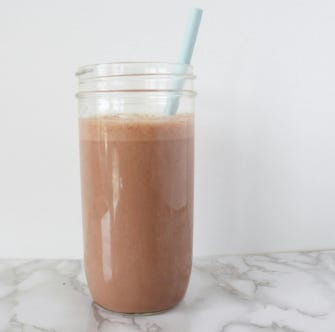

If insulin sensitivity is the goal, your smoothie needs protein, fiber, and fat.
Here’s the template:
1 scoop protein
1 cup frozen berries
1 tablespoon chia or flax
1 tablespoon nut butter
Handful spinach
Unsweetened almond milk
Blend.
Balanced. Stable. No spike.
Creatine: The Most Underrated Tool for Women


If you’re strength training and not using creatine, you’re leaving progress on the table.
Creatine benefits:
Supports lean muscle growth
Supports brain energy
Emerging research supports mood and cognitive benefits
Helps preserve muscle during fat loss
Dose:
3–5g daily. No loading phase needed.
That was a lot, I know. But so many of you had questions around this, and I wanted to make sure you had clear answers.
I hope this helped bring some clarity and gave you a real plan to move forward.
Til next week,
Irina